PRP hair restoration
Unlocking the benefits of PRP for hair loss recovery. Hair loss often leads to decreased self-esteem and confidence - PRP could be the solution you’ve been looking for.
A natural, growth-factor-driven approach to hair regrowth
Hair loss often leads to decreased self-esteem and confidence for both men and women. If you’re struggling with hair loss, PRP hair restoration could be the solution you’ve been looking for.
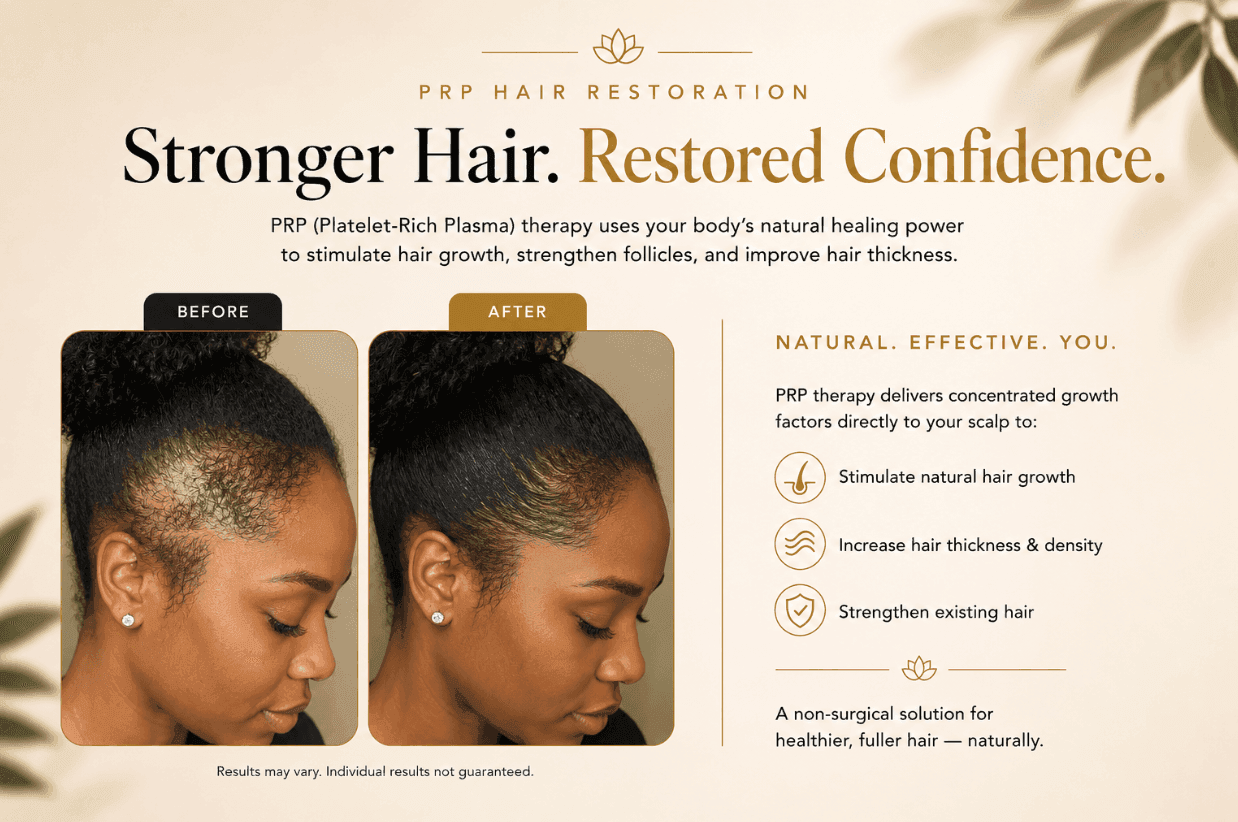
PRP (platelet-rich plasma) hair restoration is a treatment that leverages your body’s own plasma to stimulate new hair growth. Plasma, found within your blood, contains platelets, which house growth factors responsible for cell growth and tissue repair. Through a series of PRP hair injections, these growth factors can help restore hair growth - particularly for androgenetic alopecia.
Your body’s own “rescue team” - redirected to your scalp
Platelets act like our body’s natural first responders. When we get a cut or wound, platelets rush to the site to stop the bleeding and promote quick healing. This same “rescue team” can be used to awaken dormant hair follicles and stimulate new hair growth by encouraging inactive follicles to enter an active growth phase.
During a standard PRP hair restoration session, a small amount of blood is drawn from a vein and placed in a device that separates the red blood cells from the plasma. The plasma - now rich with platelets and growth factors - is then injected into the scalp, where it begins the process of re-growing hair.
What happens during your appointment
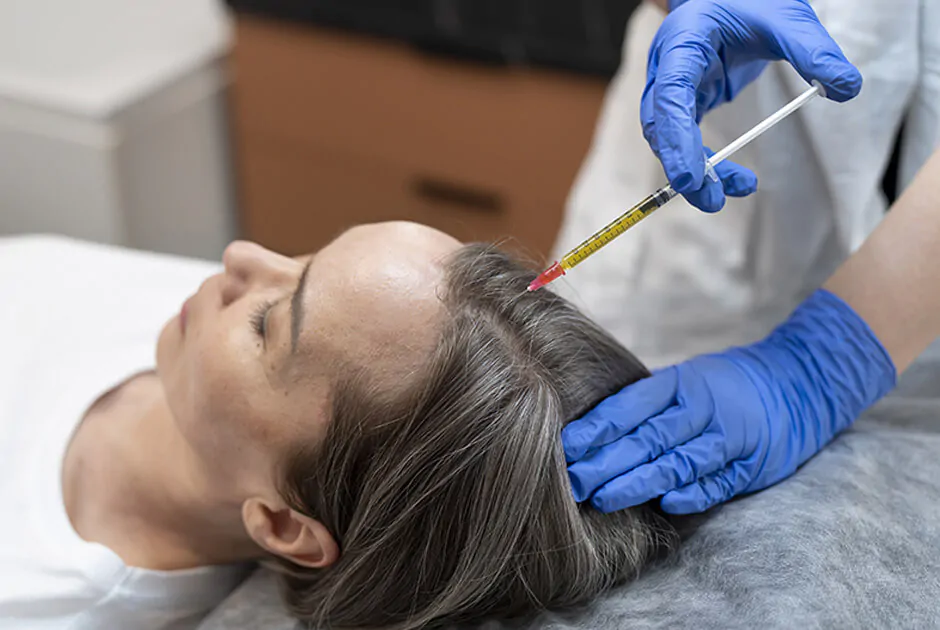
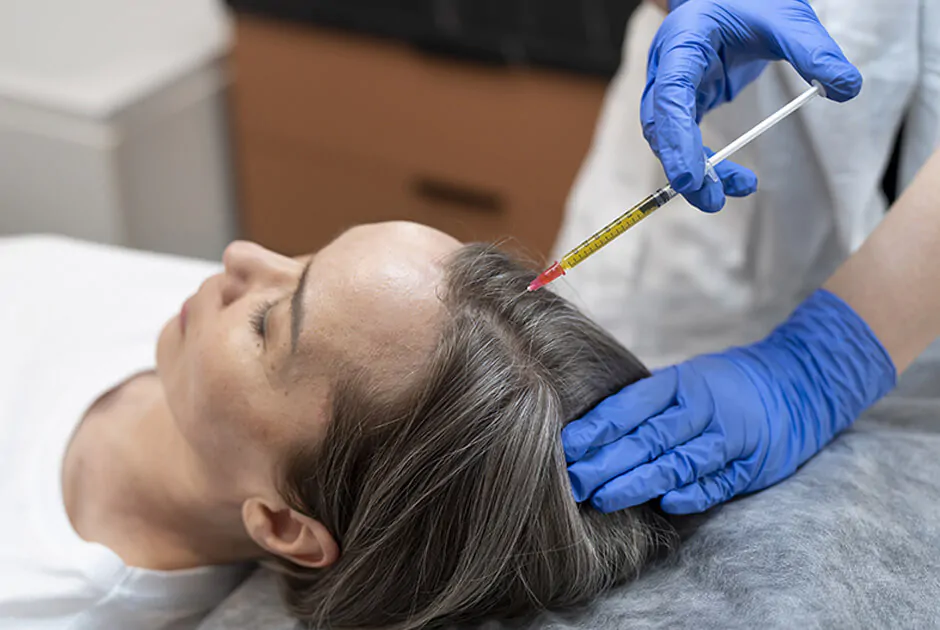
Your first PRP hair restoration treatment will involve cleaning the scalp and applying topical anesthetics to decrease any discomfort. Then we’ll take a small sample of blood from one of the veins, spin it in a machine to separate the red blood cells from the plasma, and draw the platelet-rich plasma into a syringe for injection into specific areas of your scalp.
With the anesthetic infusion, most people find the PRP injections really tolerable. The entire process typically takes around an hour and a half, although the exact duration may vary from one person to another.
Back to daily life - immediately
PRP hair injections allow you to resume your regular daily activities immediately after your appointment. However, some patients may experience minor side effects such as soreness, swelling, itching, or pinpoint bleeding at the injection sites. These effects are typically mild and subside quickly.
A few key things to keep in mind
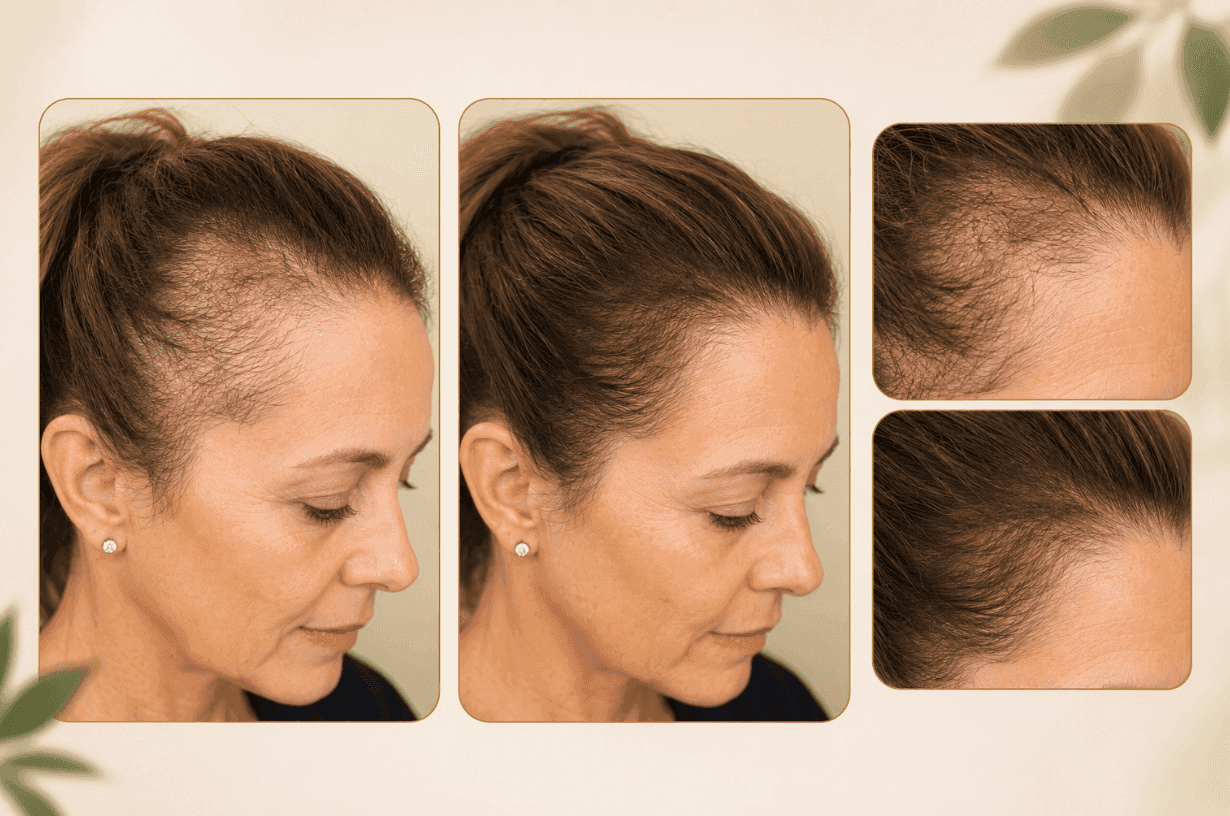
Patience Required: PRP hair injections are not a quick fix. Hair regrowth takes time, and many people need several sessions to achieve and maintain their desired results. It’s important to understand the process and get a clear idea of how long it might take to see noticeable changes.
Varied Results: Not all types of hair loss respond to PRP treatment. Since hair loss can be caused by various factors like stress, genetics, age, medications, or illness, results can vary based on the underlying cause.
You might be a great candidate if you...
- Are in good health
- Are experiencing hair loss, especially from androgenetic alopecia
- Understand that seeing results from PRP injections is a gradual process
Common questions, straight answers
What is PRP hair restoration?
PRP (platelet-rich plasma) hair restoration is a treatment that leverages your body’s own plasma to stimulate new hair growth. Plasma, found within your blood, contains platelets, which in turn house growth factors responsible for cell growth and tissue repair. Through a series of PRP hair injections, these growth factors can assist men and women with specific hair conditions - particularly androgenetic alopecia - in restoring hair growth.
How does PRP hair restoration work?
Platelets act like our body’s natural first responders. When we get a cut or wound, platelets rush to the site to stop the bleeding and promote quick healing. This same “rescue team” can be used to awaken dormant hair follicles and stimulate new hair growth by encouraging inactive follicles to enter an active growth phase. A small amount of blood is drawn, spun in a centrifuge to separate red blood cells from plasma, and the plasma - rich with platelets and growth factors - is injected into the scalp.
What happens during a PRP appointment?
Your first PRP session starts with cleaning the scalp and applying topical anesthetics to decrease discomfort. Blood is drawn from a vein, spun in a centrifuge to separate the plasma, then the plasma is drawn into a syringe and injected into specific areas of your scalp. Most people find the injections quite tolerable thanks to the anesthetic. The entire process typically takes about one and a half hours.
What is recovery like?
PRP hair injections allow you to resume your regular daily activities immediately after your appointment. However, some patients may experience minor side effects such as soreness, swelling, itching, or pinpoint bleeding at the injection sites. These effects are typically mild and subside quickly.
When will I see results?
PRP hair injections are not a quick fix. Hair regrowth takes time, and many people need several sessions to achieve and maintain their desired results. Since hair loss can be caused by various factors like stress, genetics, age, medications, or illness, results can vary based on the underlying cause.
Who is a good candidate?
You might be a great candidate for PRP hair restoration if you’re in good health, are experiencing hair loss (especially from androgenetic alopecia), and understand that seeing results is a gradual process.
Related services
Ready to bring your hair back to life?
Book a free consultation. Our medical team will design a PRP protocol tailored to your goals.